Installation
Step 1: Create access token for the repository and package
- Get access to the repository https://github.com/silence-laboratories/silent-shard-artifacts from the Silence Laboratories team.
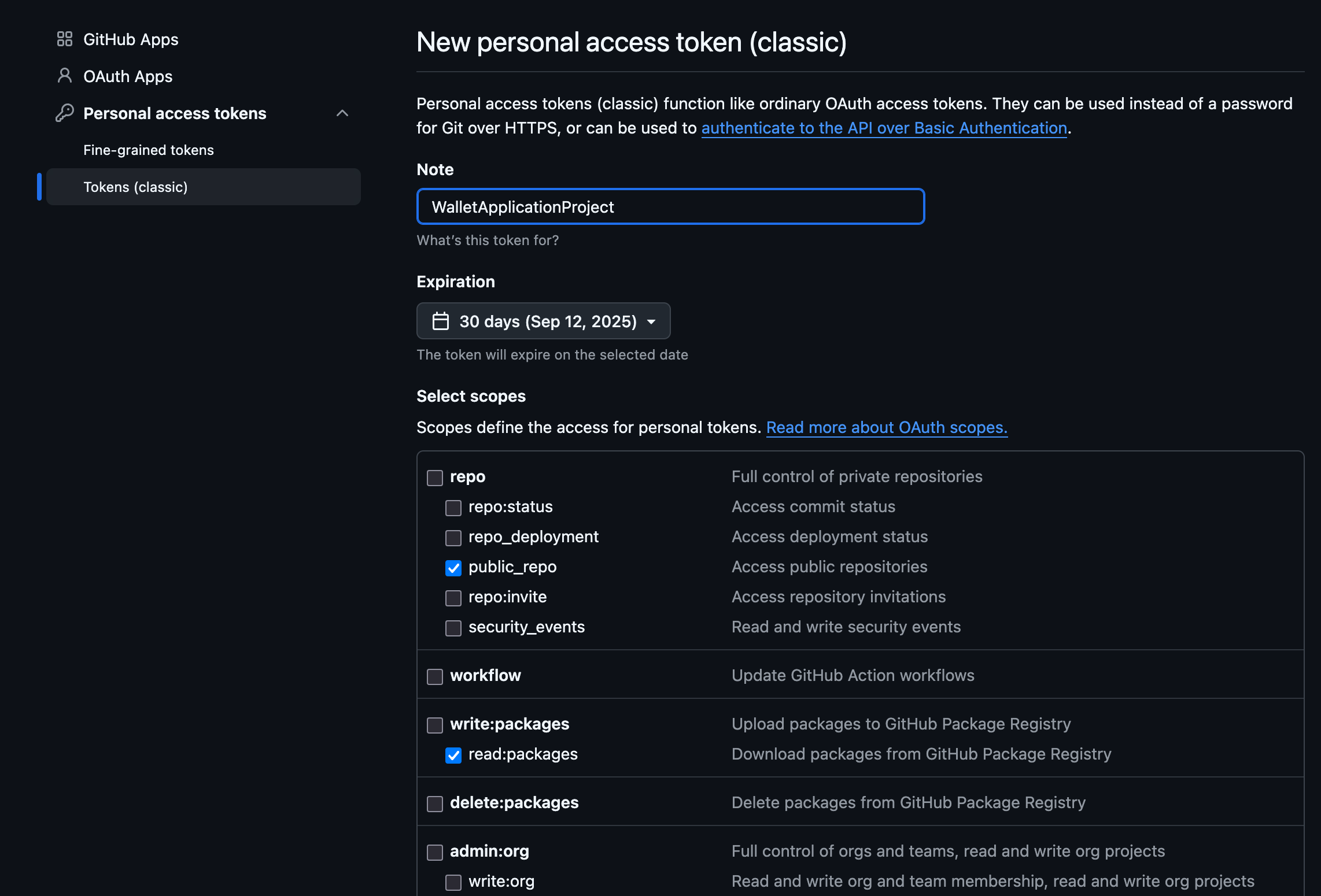
- Create a personal access token at https://github.com/settings/tokens with the following scopes
checked[✓] to access the repository, and it's
associated GithubPackages
through gradle.
- Under
repo-> [✓]public_repo - Under
write:packages-> [✓]read:packages
We can leavewrite:packagesuntouched/unchecked as we only need read access - It will end up looking like this : Two items checked everything else unchecked. See below.
- Under
Step 2: Configure settings.gradle.kts
-
Add the following maven repo under the dependencyResolutionManagement -> repositories :
Under
dependencyResolutionManagement{
//Other stuff
repositories{
//Add here the block shown below
  }
//Other stuff
}
Add the following
maven {
    url =
        uri("https://maven.pkg.github.com/silence-laboratories/silent-shard-artifacts")
    credentials {
        username = "github_username"
        password = "token_we_just_created"
    }
}- Replace
github_usernamewith your github username(The one we used for creating token). - Replace
token_we_just_createdwith the token we created.
- Replace
-
Your final
dependencyResolutionManagementblock will look like this (along with your own configuration)dependencyResolutionManagement {
repositoriesMode.set(RepositoriesMode.FAIL_ON_PROJECT_REPOS)
repositories {
google()
mavenCentral()
maven {
url =
uri("https://maven.pkg.github.com/silence-laboratories/silent-shard-artifacts")
credentials {
username = "github_username"
password = "token_we_just_created"
}
}
//Other private repos or other resolution configuration. Or maybe another maven repo.
}
}
Advanced: Keep credentials out of source control
Instead of hardcoding your username and token, store them in local.properties (gitignored by default):
gpr.user=your_github_username
gpr.token=ghp_your_personal_access_token
Then add a helper in settings.gradle.kts that reads from local.properties, Gradle properties, or environment variables:
val localPropertiesFile = file("local.properties")
val localProperties = java.util.Properties()
if (localPropertiesFile.exists()) {
    localPropertiesFile.inputStream().use { localProperties.load(it) }
}

fun getCredential(key: String): String {
    return localProperties.getProperty(key)
        ?: providers.gradleProperty(key).orNull
        ?: System.getenv("ORG_GRADLE_PROJECT_$key")
        ?: ""
}
Use it in the maven block:
maven {
    url = uri("https://maven.pkg.github.com/silence-laboratories/silent-shard-artifacts")
    credentials {
        username = getCredential("gpr.user")
        password = getCredential("gpr.token")
    }
}
This is the pattern used by the reference example apps.
Step 4: Configure app level build.gradle.kts
Add the dependency:
implementation("com.silencelaboratories.silentshard:trio:1.0.0")
Your final dependencies block will look like this:
dependencies {
  implementation("com.silencelaboratories.silentshard:trio:1.0.0")
  //Your Other dependencies
}
Step 5: Gradle-Sync
- Sync gradle with project files and that's it.